Osservatorio della Rete L'ABUSO

Tag: Rete L’ABUSO

  • ENNA – Denunciato dalla Rete L’ABUSO s.e. Rosario Gisana e altri tre monsignori per presunti reati omissivi

    ENNA – Denunciato dalla Rete L’ABUSO s.e. Rosario Gisana e altri tre monsignori per presunti reati omissivi

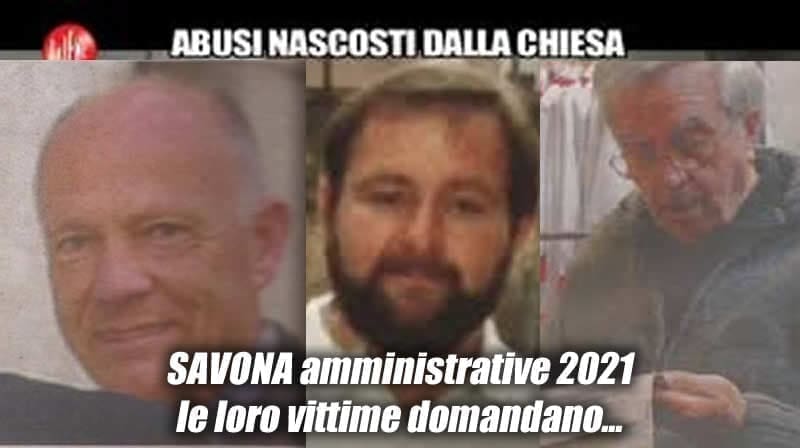
    Una serie di foto acquisite nel ferrarese, dove don Rugolo, malgrado le denunce, era stato furtivamente trasferito da mons. Rosario Gisana verso la fine del 2019, asserendo problemi di salute e assegnato a al vescovo di Ferrara Gian Carlo Perego, il quale come si evince chiaramente dal materiale acquisito, permetteva di organizzare addirittura incontri per ragazzi dai 14 ai 17 anni, come quello organizzato dal Gruppo Giovani Vigarano della parrocchia Natività della Beata Vergine Maria (foto a lato).

    Certamente ora va verificato se mons. Gian Carlo Perego fosse stato informato da mons. Rosario Gisana dei reali motivi del trasferimento, che in caso emergesse fosse informato lo vedrebbero implicato nel favoreggiamento di don Rugolo.

    Ma le accuse formalizzate oggi alla procura della Repubblica di Enna dalla Rete L’ABUSO vanno ben oltre, in quanto nei giorni scorsi sono emerse altre presunte vittime di don Rugolo, abusate dopo il 2015 che metterebbero nei guai non solo il vescovo Rosario Gisana, ma altri due monsignori ai quali la prima presunta vittima aveva denunciato nel 2014.

    Infatti, anche se pur vero che in Italia i vescovi non hanno l’obbligo della denuncia, è anche vero che non possono sottrarsi come qualunque altro cittadino, alle responsabilità di cui al 2° comma dell’art. 40 c.p. che recita “non impedire un evento che si ha l’obbligo giuridico di evitare, equivale a cagionarlo”.

    Ed è proprio la situazione che emergerebbe stando a quanto dichiarato dalle altre vittime, che se la curia fosse intervenuta dopo le prime segnalazioni fatte nel 2014, molto probabilmente non si sarebbero prodotte. Anche l’accusa della presunta offerta economica avanzata dalla Diocesi alla presunta vittima attraverso la Caritas Diocesana, certo vista con gli occhi della Rete L’ABUSO, che qualche caso giudiziario in materia lo ha affrontato, appare verosimile e ultimamente non isolato.

    Stessa situazione per quanto concerne la Diocesi di Ferrara, che coscientemente o meno, ha di fatto favorito don Rugolo, per la quale nella denuncia odierna l’Associazione Rete L’ABUSO chiede alla procura di identificare e sentire tutte le persone ritratte nelle varie foto acquisite, tra le quali potrebbero esserci altre vittime.

    Naturalmente l’Associazione invita tutti coloro che sia a Enna che nel ferrarese sono vittime oppure “persone informate sui fatti” , a rivolgersi a Polizia e Carabinieri o direttamente alla Rete L’ABUSO portavoce@retelabuso.org.

    Francesco Zanardi

    https://test.retelabuso.org/wp-content/uploads/2025/09/il-documentario-sugli-abusi-nelle-chiese-di-new-orleans-basato-su-un-reportage-del-guardian-vince-il-premio-piu-importante.webpwp-content/uploads/2025/12/3-3-di-preti-pedofili-grazie-alla-complicita-dello-stato-italiano-che-non-interviene-da-decenni-non-solo-sul-clero-video-integrale-della-conferenza-alla-stampa-estera.webpwp-content/uploads/2026/05/la-coppia-che-si-suicida-come-la-figlia-molestata-da-bambina-da-un-parente-lultima-intervista-al-papa-quelluomo-un-assassino.webpwp-content/uploads/2025/12/parte-da-savona-sabato-24-la-panchina-viola-liniziativa-italiana-di-sensibilizzazione-contro-gli-abusi-su-minori-e-persone-vulnerabili.webpwp-content/uploads/2026/01/il-vescovo-di-bilbao-riconosce-il-lavoro-di-el-pais-per-indagare-sulla-pedofilia-e-gli-sforzi-delle-vittime-per-denunciare.webp2021/03/04/mons-perego-sapeva-di-don-rugolo-a-ferrara-lo-conferma-lavvocato-della-diocesi-barbara-grandi/

  • ENG – Webinar ECA – Federico Tulli

    ENG – Webinar ECA – Federico Tulli

    Good evening, thank you for the invitation to participate in this important event.

    A little over a year ago, on December 17, 2019, the pope finally lifted the papal secrecy on pedophilia cases handled by the Vatican involving priests. The civil magistracies of all countries affected by this criminal phenomenon can now therefore access the acts of canonical processes and the archives of the dioceses. But not only that. The elimination of pontifical secrecy probably also marks a turning point in terms of communication on “sensitive” issues concerning the internal affairs of the Holy See. I am thinking, for example, of the decision to make public the dossier on Cardinal MacCarrick, which has been much discussed in recent months. I would define this as a side effect of the elimination of papal secrecy. This elimination is undoubtedly an important signal in the direction of transparency and collaboration of the Holy See with foreign and international institutions, and may have important consequences in favor of the victims awaiting justice. But from the point of view of crime prevention, it should be said immediately that it does not change anything. Let’s go in order.

    Papal secrecy was codified in the document “Secreta continere” of Paul VI on February 4, 1974. It concerned (and I quote) “certain matters of major importance” and had to “be guarded with grave obligation”. That is to say, in case of violation there was excommunication. Among these secreted “affairs of greater importance” were several crimes, including violence against minors. This meant, for example, that the victim of a pedophile priest undergoing a canonical trial was never informed of the outcome of the judgment. But also that the names of pedophiles judged by Vatican judges could remain “unknown” to lay judges. With obvious consequences, unfortunately, on the safety of tens of thousands of minors around the world, since pedophile priests, after the period of prayer and penance provided as a penalty for their “sin”, almost always return to practice in parishes, to teach in religious schools, to attend oratories, scout camps and so on. As it has been documented by dozens of governmental and mixed State-Church investigations in the last decade in Ireland, Germany, USA, Holland, Belgium, Auystralia etc… In short, secrecy has been for decades – if not for centuries, since the Inquisition – one of the matrices of the spread of clerical pedophilia in the world. Now, with a guilty and unprecedented delay, the Holy See has at least remedied this.

    Another matrix of the spread of “ecclesiastical” pedophilia was and is the “reason of State”.

    Let me explain myself better with a quick example:

    On April 9, 2010 – the year in which news about these crimes finally began to be published regularly in Italy as well – the Washington Post discovered that in 1985 Cardinal Ratzinger (then pref. of the CDF) had advised against reducing to the lay state a California priest who had molested minors. The response of the Holy See was immediate: the then Prefect of the Congregation for the Doctrine of the Faith “did not cover up the case”, but only asked to study it with “greater attention” for the “good of all those involved”. In the long investigation, the WP reconstructs that, in a letter written in Latin to Bishop John Cummins, of the Diocese of Oakland, Ratzinger decided not to remove the priest. A choice that the future Pope motivated by writing verbatim “for the good of the universal Church”. And what does that mean translated into more earthly terms? To avoid public scandal. Hence the “reason of State”.

    For decades, in the name of “reason of State” and protected by papal secrecy, a very violent crime against the most defenseless human beings was buried under a gigantic and widespread cloak of silence, complicity and silence impossible – humanly speaking – to accept. It must be said, however, that if papal secrecy has been eliminated, the same cannot be said of the reason of State.

    All this concerns Italy very closely and not only for geographical reasons. In the weekly magazine Left, and then in the book Giustizia divina with Emanuela Provera, we were the first and so far the only journalists, thanks to the collaboration of the L’Abuso network, to pierce the aforementioned cloak over the ecclesiastical courts scattered throughout Italy and present in each of the more than 220 dioceses. Here is an excerpt from the story of Giada Vitale, a victim at the age of 13 of a 55-year-old parish priest.

    “There were three of us in the room: me, the judge and the notary of the Curia of Termoli. I already knew the notary, because before the hearing he told me that the ecclesiastical judge wanted a copy of my complaint to the Italian prosecutor’s office. This shows the way in which ecclesiastical justice works with the presumed victims. Moreover, Giada faced the interrogation alone, that is without a lawyer, because in these processes only the one chosen by the curia can be present, even for the witness. And she rightly refused him. “The judge was trying to get me to say that I felt affection for my rapist but I only wanted to point out that when the abuse began I was thirteen years old.” About five years have passed since the hearing and Giada has never heard anything on the record. “I was never notified of the outcome of the trial nor do I know how my statements were used.”

    Thanks to the abolition of papal secrecy, will other victims, unlike Giada, from now on know the outcome of the canonical judgment? According to the declarations of the Holy See, the answer is yes, and this would already be something in favor of the victims, because certain information could be useful to them during the Italian criminal and civil process. But what should perhaps be of most interest to us is the possibility of collaboration between the ecclesiastical authorities and the Italian civil authorities. From this point of view, however, Bergoglio’s “turning point” moves nothing. I might say, not because of the pope. In fact, the Italian law – unlike the French one, for example – for crimes of this type provides the obligation to report only for public officials, and bishops who are not public officials continue to do what they have always done: that is, not to report suspected priests to the civil authorities. This issue was also reiterated by the Italian Episcopal Conference when it explained why it did not include the obligation to report in the anti-pedophilia guidelines.

    If we add to this the fact that also the New Concordat of 1985 between the Italian State and the Holy See, in its article 4, relieves the bishops from the obligation to collaborate with the civil authority, all the nodes that have always strongly limited the investigations of the Italian judiciary when there are priests involved, with the risk of interfering with the exercise of criminal prosecution against those suspected of pedophilia and the “superiors” who transfer them from parish to parish allowing them to remain in contact with minors and repeat the abuse, remain unresolved.

    The elimination of art. 4 from the Concordat would not be a small matter. This is also stated by the cases surveyed by Rete L’Abuso and the statistics that Francesco Zanardi communicated during his speech. Personally, I have dedicated an entire book to Italy reconstructing the history of pedophilia in the Italian Church from 1870 to 2014.

    Since I wrote my first book for L’Asino d’oro on these issues in 2010, I have had the opportunity to speak with hundreds of victims. The lives of many of them continue as a function of obtaining justice for what they have suffered. There are those who – like those present – have founded an association, transforming their personal vicissitudes into a collective battle for civilization. One of the strengths of their civil commitment – perhaps the most important because it is unassailable – in my opinion lies in having understood that the real “enemy” to be fought lies in the thinking that still denies the violence suffered by the child. That is, the thought that confuses a crime (very violent against a person) with sin. In fact, we know from the psychiatrist Fagioli that pedophilia is the annulment of the human reality of the child, a sort of psychic murder.

    However, even in the Church of Pope Francis, abuse, that is, “the sexual act of a cleric with a minor,” is still treated only as a crime against morality, an offense against God, a violation of the sixth commandment. Consequently, the sinner must answer only to those who represent the Most High on Earth (the Pope), and not to the laws of the civil society to which he belongs. Well, all this is not taken into account by my fellow Italian journalists when they have to report news about alleged crimes against minors committed in the ecclesiastical sphere; and neither does the Italian State take it into account by keeping the Concordat alive, although since 1996 the legislation on crimes of a “sexual” nature against children (and women) has made enormous progress. What consequences this blindness of our institutions has on the safety of children who attend parishes, oratories, minor seminaries and Catholic schools is not only easy to imagine but has been – unfortunately – documented.

    Therefore, in conclusion, the abolition of the pontifical secret is a good thing – because in some way it can facilitate the action of the civil judiciary – but it is not enough. At least in Italy it is not enough. It would take a cultural paradigm shift that would lead the Vatican, the men of the Church, the Italian institutions and the great organs of the press to “see” rape for what it is: a violent crime that destroys the life of those who suffer it. But this would mean for believers to deny the Sixth Commandment, one of the cornerstones of religious and political power of the Catholic and Roman Apostolic Church. A temporal power that the Italian State and the Italian media still struggle to disavow.

    Federico Tulli

  • Webinar ECA Global – Federico Tulli

    Webinar ECA Global – Federico Tulli

    Intervento di Federico Tulli

    Buonasera, vi ringrazio per l’invito a partecipare a questo importante appuntamento.

    Poco più un anno fa, il 17 dicembre 2019, il papa ha finalmente tolto il segreto pontificio sui casi di pedofilia trattati dal Vaticano che riguardano i sacerdoti. Le magistrature civili di tutti i Paesi colpiti da questo fenomeno criminale possono quindi ora accedere agli atti dei processi canonici e agli archivi delle diocesi. Ma non solo. Probabilmente l’eliminazione del segreto pontificio segna anche una svolta a livello di comunicazione su temi “sensibili” che riguardano gli affari interni alla Santa Sede. Penso ad es. la decisione di rendere pubblico il dossier sul cardinale MacCarrick di cui tanto si è parlato nei mesi scorsi. Lo definirei un effetto collaterale dell’eliminazione segreto pontifico. Eliminazione che è senza alcun dubbio un importante segnale in direzione della trasparenza e della collaborazione della Santa sede con le istituzioni straniere e internazionali, e può avere importanti conseguenze in favore delle vittime in attesa di giustizia. Ma dal punto di vista della prevenzione dei crimini è bene dire subito che non sposta nulla. Andiamo per ordine.

    Il segreto pontificio venne codificato nel documento “Secreta continere” di Paolo VI il 4 febbraio 1974. Riguardava (cito) “taluni affari di maggiore importanza” e doveva “essere custodito con obbligo grave”. Vale a dire, che in caso di violazione c’era la scomunica. Tra questi “affari di maggiore importanza” secretati c’erano diversi reati, tra cui la violenza su minori. Questo ha comportato per esempio che la vittima di un sacerdote pedofilo sottoposto a processo canonico non venisse mai informata dell’esito del giudizio. Ma anche che i nomi dei pedofili giudicati dai giudici vaticani potessero rimanere “sconosciuti” a quelli laici. Con ovvie conseguenze, purtroppo, sull’incolumità di decine di migliaia di minori in tutto il mondo, poiché i sacerdoti pedofili, terminato il periodo di preghiera e penitenza previsto come sanzione per il loro “peccato”, tornano quasi sempre a esercitare nelle parrocchie, a insegnare nelle scuole religiose, a frequentare oratori, campi scout e così via. Come del resto è stato documentato da decine di inchieste governative e miste Stato-Chiesa nell’ultimo decennio in Irlanda, Germania, Usa, Olanda, Belgio, Auystralia etc… Insomma, la segretezza è stata per decenni – se non per secoli, dall’Inquisizione in poi – una delle matrici della diffusione della pedofilia clericale nel mondo. Ora con colpevolissimo e inaudito ritardo almeno a questo la Santa Sede ha posto rimedio.

    Un’altra matrice della diffusione della pedofilia “ecclesiastica” è stata ed è la “ragion di Stato”.

    Mi spiego meglio con un esempio veloce:

    Il 9 aprile 2010 – anno in cui le notizie su questi crimini iniziarono finalmente ad essere pubblicate con regolarità anche in Italia – il Washington Post scoprì che nel 1985 il cardinale Ratzinger (allora pref. della Cdf) aveva sconsigliato di ridurre allo stato laicale un sacerdote californiano che aveva molestato minori. La replica della Santa Sede fu immediata: l’allora prefetto della Congregazione per la dottrina della fede «non coprì il caso», ma chiese solo di studiarlo con «maggiore attenzione» per il «bene di tutte le persone coinvolte». Nella lunga inchiesta il WP ricostruisce che, in una lettera scritta in latino al vescovo John Cummins, della diocesi di Oakland, Ratzinger decise di non rimuovere il sacerdote. Una scelta che il futuro Papa motivò scrivendo testualmente «per il bene della Chiesa universale». E cosa vuol dire tradotto in termini più terreni? Per evitare lo scandalo pubblico. Di qui la “ragion di Stato”.

    Per decenni in nome della “ragion di Stato” e protetto dal segreto pontificio un crimine violentissimo nei confronti degli esseri umani più indifesi è stato sepolto sotto una gigantesca e diffusa cappa di omertà, complicità e silenzio impossibili – umanamente – da accettare. Va detto però che se il segreto pontificio è stato eliminato, non si può dire altrettanto della ragion di Stato.

    Tutto questo riguarda molto da vicino l’Italia e non solo per motivi geografici. Sul settimanale Left, e poi nel libro Giustizia divina con Emanuela Provera, per primi e finora unici giornalisti grazie alla collaborazione di rete L’Abuso abbiamo bucato la cappa di cui sopra che grava sui tribunali ecclesiastici sparsi in Italia e presenti in ciascuna delle oltre 220 diocesi. Riporto qui un brano del racconto di Giada Vitale, vittima a 13 anni di un parroco 55enne.

    «Nella stanza eravamo in tre: io, il giudice e il notaio della Curia di Termoli. Il notaio lo conoscevo già, perché prima dell’udienza mi disse che il giudice ecclesiastico voleva una copia della mia denuncia alla procura italiana. E già questo fa capire in che modo lavora la giustizia ecclesiastica nei confronti delle presunte vittime. Inoltre Giada affrontò da sola l’interrogatorio, cioè senza avvocato, perché in questi processi può essere presente solo quello scelto dalla curia, anche per il testimone. E lei lo ha giustamente rifiutato. «Il giudice cercava di farmi dire che provavo affetto per il mio violentatore ma io ho voluto solo precisare che quando sono iniziati gli abusi avevo tredici anni». Dal giorno dell’audizione sono passati circa 5 anni e Giada non ha mai saputo nulla in via ufficiale. «Non mi hanno mai comunicato l’esito del processo né so in che modo le mie dichiarazioni sono state utilizzate».

    Grazie all’abolizione del segreto pontificio altre vittime, diversamente da Giada, potranno d’ora in poi conoscere l’esito del giudizio canonico? Stando alle dichiarazioni della Santa Sede la risposta è sì e sarebbe già qualcosa in favore delle vittime, perché certe informazioni potrebbero tornar loro utili durante il processo penale e civile italiano. Ma quello che forse più ci dovrebbe interessare è la possibilità di collaborazione delle autorità ecclesiastiche con quelle civili italiane. Da questo punto di vista la “svolta” di Bergoglio però non sposta nulla. Potrei dire, non per colpa del papa. Difatti la legge italiana – diversamente da quella francese, per esempio – per reati di questo tipo prevede l’obbligo di denuncia solo per i pubblici ufficiali, e i vescovi che pubblici ufficiali non sono continuano a fare quello che hanno sempre fatto: cioè a non denunciare all’autorità civile i preti sospettati. Questione ribadita anche dalla Conferenza episcopale italiana quando ha spiegato perché non ha inserito l’obbligo di denuncia nelle linee guida antipedofilia.

    Se a questo si aggiunge che anche il Nuovo Concordato del 1985 tra Stato italiano e Santa sede all’articolo 4 solleva i vescovi dall’obbligo di collaborare con l’autorità civile, ecco che restano irrisolti tutti i nodi che da sempre limitano fortemente nelle indagini la magistratura italiana quando ci sono di mezzo dei preti con il rischio di interferire con l’esercizio dell’azione penale nei confronti di quelli sospettati di pedofilia e dei “superiori” che trasferendoli di parrocchia in parrocchia consentono loro di rimanere in contatto con minori e di ripetere l’abuso.

    L’eliminazione dell’art. 4 dal Concordato non sarebbe cosa da poco. Lo dicono anche i casi censiti da Rete L’Abuso e le statistiche che Francesco Zanardi ha comunicato durante il suo intervento. Personalmente ho dedicato un intero libro all’Italia ricostruendo la storia della pedofilia nella Chiesa italiana dal 1870 al 2014.

    Da quando nel 2010 ho scritto il mio primo libro per L’Asino d’oro su questi temi ho avuto modo di parlare con centinaia di vittime. La vita di molte di loro prosegue in funzione dell’ottenimento di una giustizia per quanto subito. C’è chi – come i presenti – ha fondato un’associazione trasformando la propria vicenda personale in una battaglia collettiva di civiltà. Uno dei punti di forza del loro impegno civile – forse il più importante perché inattaccabile – secondo me sta nell’aver compreso che il vero “nemico” da combattere risiede nel pensiero che ancora oggi nega la violenza subita dal bambino. Quel pensiero cioè che confonde un reato (violentissimo contro una persona) con il peccato. Sappiamo infatti dallo psichiatra Fagioli che la pedofilia è l’annullamento della realtà umana del bambino, una sorta di omicidio psichico.

    Tuttavia anche nella Chiesa di papa Francesco l’abuso, cioè «l’atto sessuale di un chierico con un minore», è trattato ancora solo come un delitto contro la morale, un’offesa a Dio, una violazione del sesto comandamento. Di conseguenza il peccatore deve risponderne solo a chi rappresenta l’Altissimo in Terra (il papa), e non alle leggi della società civile di cui fa parte. Ebbene di tutto questo non tengono conto i miei colleghi giornalisti italiani quando devono riportare delle notizie che riguardano presunti crimini su minori commessi in ambito ecclesiastico; e nemmeno ne tiene conto lo Stato italiano mantenendo in vita il Concordato, sebbene dal 1996 la legislazione in materia di reati a sfondo “sessuale” sui bambini (e le donne) abbia fatto enormi progressi. Quali conseguenze questa cecità delle nostre istituzioni abbia sull’incolumità dei bambini che frequentano le parrocchie, gli oratori, i seminari minori e le scuole cattoliche non solo è facile  immaginarlo ma è stato – purtroppo – documentato.

    Dunque, in conclusione, bene l’abolizione del segreto pontificio – perché in qualche modo può agevolare l’azione della magistratura civile – ma non basta. Per lo meno in Italia non basta . Occorrerebbe un salto di paradigma culturale che porti il Vaticano, gli uomini di Chiesa, le istituzioni italiane e i grandi organi di stampa a “vedere” lo stupro per quel che è: un crimine violentissimo che distrugge la vita di chi lo subisce. Ma ciò significherebbe per dei credenti negare il VI Comandamento, uno dei cardini del potere religioso e politico della Chiesa cattolica e apostolica romana. Un potere temporale che lo Stato italiano e i media italiani fanno ancora fatica a disconoscere.

    Federico Tulli

    https://test.retelabuso.org/wp-content/uploads/2025/09/il-documentario-sugli-abusi-nelle-chiese-di-new-orleans-basato-su-un-reportage-del-guardian-vince-il-premio-piu-importante.webpwp-content/uploads/2025/12/3-3-di-preti-pedofili-grazie-alla-complicita-dello-stato-italiano-che-non-interviene-da-decenni-non-solo-sul-clero-video-integrale-della-conferenza-alla-stampa-estera.webpwp-content/uploads/2026/05/la-coppia-che-si-suicida-come-la-figlia-molestata-da-bambina-da-un-parente-lultima-intervista-al-papa-quelluomo-un-assassino.webpwp-content/uploads/2025/12/parte-da-savona-sabato-24-la-panchina-viola-liniziativa-italiana-di-sensibilizzazione-contro-gli-abusi-su-minori-e-persone-vulnerabili.webpwp-content/uploads/2026/01/il-vescovo-di-bilbao-riconosce-il-lavoro-di-el-pais-per-indagare-sulla-pedofilia-e-gli-sforzi-delle-vittime-per-denunciare.webp2021/02/20/spagnolo-webinar-eca-federico-tulli/

    https://test.retelabuso.org/wp-content/uploads/2025/09/il-documentario-sugli-abusi-nelle-chiese-di-new-orleans-basato-su-un-reportage-del-guardian-vince-il-premio-piu-importante.webpwp-content/uploads/2025/12/3-3-di-preti-pedofili-grazie-alla-complicita-dello-stato-italiano-che-non-interviene-da-decenni-non-solo-sul-clero-video-integrale-della-conferenza-alla-stampa-estera.webpwp-content/uploads/2026/05/la-coppia-che-si-suicida-come-la-figlia-molestata-da-bambina-da-un-parente-lultima-intervista-al-papa-quelluomo-un-assassino.webpwp-content/uploads/2025/12/parte-da-savona-sabato-24-la-panchina-viola-liniziativa-italiana-di-sensibilizzazione-contro-gli-abusi-su-minori-e-persone-vulnerabili.webpwp-content/uploads/2026/01/il-vescovo-di-bilbao-riconosce-il-lavoro-di-el-pais-per-indagare-sulla-pedofilia-e-gli-sforzi-delle-vittime-per-denunciare.webp2021/02/20/eng-webinar-eca-federico-tulli/

  • ENG – Webinar ECA Global – avv. Mario Caligiuri

    ENG – Webinar ECA Global – avv. Mario Caligiuri

    First of all, I would like to greet and thank all those who, with their participation, have made possible the realization of this important occasion of confrontation and expansion of knowledge. From those who have been involved in the numerous contacts, to those who will continue to take care of the translation of the speeches.

    A special greeting and thank you goes to the victims, the survivors and their families who, with the courage that I have witnessed, continue to contribute to ensuring that what they have suffered will never be repeated.

    o=O=o

    The first reflection on which I would like to involve you concerns the emphasis with which it was propagandized at the end of 2019 by news agencies close to the Vatican the decision of Pope Bergoglio to abolish, after a good forty-five years, the pontifical secret on serious crimes committed by Catholic religious, including the rape of minors.

    In fact, it has been since 1974, with the pontificate of Paul VI, that absolute secrecy was imposed on all members of ecclesiastical authority regarding particular pontifical documents, including the unconditional prohibition of access to evidence concerning cases of sexual abuse of priests kept in the archives of Vatican departments and dioceses. However, since this is actually an order updated in 2001 by the will of Pope Wojtyla, signed by the then Monsignors Joseph Ratzinger and Tarcisio Bertone, I think it is interesting to learn from accredited sources on this ugly subject what exactly the mysterious “papal secret” is: that wall made of compulsory silence about religious pedophiles and/or lureers in the confessional, as we read in the appendix of the book “Emanuela Orlandi – La Verità: dai Lupi Grigi alla banda della Magliana”, published in 2008 by Baldini-Castoldi-Dalai, written by the acute journalist Pino Nicotri, published in full on micromega-online.

    It must be acknowledged that today’s rescriptum, at least in the abstract, represents the possibility of being able to free oneself from the wall of obligatory silence for all those involved, or who can be involved, in canonical criminal proceedings – complainants, victims, witnesses, etc. – and that this is the only way to be able to do so. It would seem that this reform, and I repeat, it would seem, could even concretize that transparency that too many times in the past has failed to conceal the repetition of violence against children with the criminal participation of the hierarchies and in particular of the bishops.

    Few people will have failed to notice that the Catholic media, in announcing the beginning of a new era, were concerned to repeatedly reassure the community of the Catholic faithful and its pastors around the world that, by the express will of the Pope, the new rules would never, ever be able to undermine the secret learned during confession and that the mandatory silence would remain absolute and unassailable.

    Moreover, shortly before, in May 2019, Pope Francis with the Motu proprio Vos estis lux mundi had introduced into the canonical order new procedural norms to combat sexual abuse and ensure that bishops and religious superiors would be held accountable for their actions by making it mandatory for clerics, religious men and women to promptly report (denounce) to the ecclesiastical authority all news of abuse of which they become aware, as well as any omissions and cover-ups in the handling of cases, but, again, with effect only within the Vatican’s territorial jurisdiction.

    Since these are laws, norms and instructions that concern a very circumscribed territorial sphere, conceived for a unique reality in the world composed of priests and religious, with very few children, it is impossible to be convinced that, despite the good intentions of its legislator, the objectives set can be reached, despite the fact that the lack of collaboration between civil and ecclesiastical authorities has been globally ascertained.

    On closer inspection, it is not only a question of this, because with his reform the Pontiff implicitly addresses to all foreign states the legitimate claim of autonomy of the right of the governing state to commit itself to healing the domestic scourge of pedophilia.

    It must be acknowledged that the purpose of the concern with which the protection of the secret learnt during confession was intended was clearly political because, in order to safeguard the image of the Church in the world, it was necessary to dissuade those forces sensitive to human rights within other States that could have made operative in their respective legal systems norms to ensure the identification of priests and their protectors responsible for the solicitation and sexual violence perpetrated on children.

    In fact, already in the summer of 2017, the absolute obligation was called into question and made known by the laws of countries such as India and Australia, which would have liked to impose on priests confessors to report to public authority cases of abuse revealed by penitents. The results were very poor and the coactive effect of the new rules, promulgated with enormous delay, despite the fact that the spread of child abuse in the world had exposed the responsibility of the diocesan curia where the same authority has too often taken the direction, or offered cover to concealment and deception, helping to encourage the irrepressible urge of pedophile priests to replicate the violence.

    In any case, for them, especially for the bishops, who are concerned to present the facade of good governance of the diocese where they are installed, they put in the background to get away with the safety of boys and girls, unlike in the past, at least in theory they can no longer count on the obligation of subordinates – priests, nuns, brothers, etc.. – to have to keep their mouths shut, whatever the predictable devastating consequences of abuse.

    But, in fact, despite the efforts made by the Vatican legislature, the obscene representation of this situation remains threateningly active and in many ways still unchecked, thanks to the consolidated influence of the function assumed over the centuries by the bishops both in the hierarchy of the Church and in the community of the faithful.

    In addition to this situation, all dioceses have started to set up diocesan help-desks to assist victims of sexual abuse by clergy, not only in terms of listening to them, but also to protect their rights and provide psychological support. There remain, therefore, many perplexities and grey areas, and therefore Rete l’Abuso has deemed it necessary to investigate the effective observance of constitutional guarantees and international conventions for the protection of victims and their families.

    However, it should be kept in due consideration that, despite the good intentions of Pope Francis and the promulgators, these initiatives do not have the requirements of efficiency to stem the abuses of criminal parish priests, unlike how the ordinary judiciary could do it both on the operational side, of technical specialization and means of investigation and coordination that can be used by police personnel. The most critical problems for the civil authorities and for the police forces arise from the scarce or non-existent collaboration, at the limits of the concurrent hypothesis of reticence or personal aiding and abetting, in the reconstruction of the abusive conduct on the part of the persons informed about the facts, who, availing themselves of the right not to testify or to make available documents regarding what is held or known by reason of their ministry, do not contribute to the identification of the presumed culprits.

    Certainly with better formulated or integrated norms, far more satisfactory results could be achieved, especially in terms of prevention. In any case, the distinction in the efficiency and qualitative reliability of civil justice, with all the known limits, is indisputable if compared to the culture and customs of the Church-institution and to the absurd claim that it should be left free to deal with problems in its own way, especially because in this framework is inscribed pedophilia as its obscene secret appendix, considered – and it could not be otherwise – a sin against morality in violation of the sixth commandment of the Decalogue, rather than a serious crime against the person.

    In this regard, I cannot help but recall the reflection made by Slavoj Zizek, in response to the reluctance of the Church, not having to limit itself to the fact that we are faced with horrendous crimes and that, by not cooperating fully with the investigations initiated by the prosecutors, it becomes an accomplice.

    “The Church as such, as an institution, must also be investigated with regard to the way in which it systematically creates the conditions for such crimes to occur. To argue that it should be the only one to deal with the crimes of pedophilia that occur within its ranks is problematic not only from a legal point of view, since this would imply a kind of extraterritorial right on its part even for common crimes that fall under criminal law; as if the very fact that these scandals have broken out is not proof that it is incapable of solving them.”

    The Italian State, with the persistent inertia of the executive and politics, seems to pretend not to know, despite the raging of the phenomenon and the warnings addressed to it by the UN in the sessions of January 2019 with the participation of Rete L’Abuso and its complaint, having instead to react promptly and prevent, with the introduction of new rules, that the criminal and civil judiciary would be robbed by a foreign state what the Constitution requires it to guarantee: the psychophysical protection of boys and girls.

    Our penal system suffers heavily from the intolerable denial of the state’s right to effectively repress crimes of pedophilia, especially ecclesiastical. Strictly speaking, the executive branch could be held responsible even for the violation of international conventions and provisions regarding the protection of the rights of minors. Consequently, legislative initiatives must be taken with extreme urgency to adapt Italian legislation to the pressing demand for intervention, because a structural element of justice, especially when the victims are boys and girls, is like a time-dependent disease that attacks their lives that must be eradicated soon and definitively.

    Following is the simple and clear proposal, perhaps preceded by a parliamentary commission of inquiry on the subject, but without any need to put hands on the Concordat between the Italian State and the Catholic Church, keeping intact the sacramental seal.

    In practice, the norm ex art. 364 c.p., limited to crimes against the personality of the State, should only be integrated for the reasons stated by inserting the crimes indicated in the 10 articles as named, shown in italics and highlighted in bold. There would be no antinomy either with the other norms of the penal code or conflict with the provisions of the entire system.

    Art. 364 c.p. FAILURE TO REPORT A CRIME BY THE CITIZEN

    The citizen, who, having had notice of a crime against the personality of the State (241-313) for which the law establishes life imprisonment, as well as the crimes of sexual violence against a minor (art. 609 bis, 609 ter, 609 octies), sexual acts with a minor (art. 609 quater) when prosecuted ex officio, corruption of minors (art.609 quinquies), solicitation of minors (art.609 undicies), child prostitution (art.600 bis), child pornography and possession of pornographic material (art.600 ter, 600 quater and 600 quater1) does not immediately report it to the Authority indicated in article 361 is punished with imprisonment of up to one year and a fine of between €103 and €1032.

    Nothing more or different.

    I remain available for any questions.

    Many thanks for your attention and good continuation

    Mario Caligiuri

  • WEBINAR ECA Global Justice Project – Mario Caligiuri, abogado de Red L’Abuso

    WEBINAR ECA Global Justice Project – Mario Caligiuri, abogado de Red L’Abuso

    (Discurso de Mario Caligiuri, abogado de Red L’Abuso)

    En primer lugar, quisiera saludar y agradecer a todos aquellos que, con su participación, han hecho posible la realización de esta importante oportunidad de comparación y ampliación de conocimientos. Desde quienes entablaron numerosos contactos, hasta quienes continuarán ocupándose de la traducción de las intervenciones.

    Un saludo y un agradecimiento especial para las víctimas, los supervivientes y sus familiares que, con el coraje del que soy testigo directo, siguen contribuyendo para que no se vuelva a repetir lo que han sufrido.

    o = O = o

    La primera reflexión en la que me gustaría involucrarlos se refiere al énfasis con el que se publicitò a finales de 2019 por agencias de informaciones cercanas al Vaticano la decisión del Papa Bergoglio de abolir, después de cuarenta y cinco años, el secreto papal sobre los delitos graves cometidos por religiosos católicos, incluidos las violaciones de menores.

    De hecho, es desde 1974, con el pontificado de Pablo VI, que se impuso a todos los miembros de la autoridad eclesiástica el secreto absoluto sobre determinados documentos pontificios, incluida la prohibición incondicional de acceder a las pruebas relativas a los casos de abuso sexual de sacerdotes custodiadas in los archivos de los dicasterios del Vaticano y en las diócesis. Pero, siendo en realidad una orden actualizada en 2001 por voluntad del Papa Wojtyla, firmada por los entonces Monseñores Joseph Ratzinger y Tarcisio Bertone, considero interesante aprender de fuentes acreditadas sobre este feo tema qué es exactamente el misterioso “secreto papal”: ese muro de obligado silencio sobre los religiosos pedófilos y/o seductores del confesionario, tal y como se lee en el apéndice del libro “Emanuela Orlandi – La verdad: de los lobos grises a la banda de Magliana”, publicado en 2008 por Baldini -Castoldi-Dalai, escrito por el agudo periodista Pino Nicotri, publicado íntegramente en micromega-online.

    Hay que reconocer que el rescriptum de hoy, al menos en abstracto, representa la posibilidad de poder liberarse del muro hecho de silencio obligatorio para todos los involucrados, o que puedan ser involucrados, en el proceso penal canónico – denunciantes, víctimas, testigos, etc. Parecería que esta reforma, repito, parecería, incluso podría concretar esa transparencia que demasiadas veces en el pasado ha fallado al ocultar la repetición de la violencia contra niños y niñas con la concurrencia criminal de las jerarquías y en particular de los obispos.

    A pocas personas se le habrá escapado cómo a los medios de información de matriz católica, al anunciar el comienzo de una nueva era, estaban preocupados por asegurar repetidamente a la comunidad de fieles católicos y a sus pastores esparcidos en todo el mundo que, por la precisa voluntad del pontífice, las nuevas reglas nunca, nunca podrían dañar el secreto aprendido durante la confesión y que el silencio obligatorio quedaría absoluto e inexpugnable.

    Además, poco antes, en mayo de 2019, el Papa Francisco con el Motu proprio Vos extis lux mundi había introducido en el ordenamiento canónico nuevas reglas de procedimiento para combatir los abusos sexuales y garantizar que los obispos y los superiores religiosos fueran considerados responsables de sus acciones, haciendo obligatorio a clérigos, religiosos y religiosas, la pronta comunicación (denuncia) a la autoridad eclesiástica de todas las noticias de abusos de los que tengan conocimiento, así como cualquier omisiones y coberturas en la gestión de los casos, pero, repito, con eficacia sólo dentro de la jurisdicción territorial del vaticano.

    Dado que se trata de leyes, normas e instrucciones que conciernen a un ámbito territorial muy limitado y diseñado para una realidad única en el mundo compuesta por sacerdotes y religiosos, con muy pocos niños, es imposible estar convencido de que a pesar de las buenas intenciones de su legislador, los objetivos marcados pueden alcanzarse, a pesar de que la escasa colaboración entre las autoridades civiles y eclesiásticas quedó clara a nivel mundial.

    En una inspección más cercana, no es solo esto, porque el pontífice con su reforma dirige implícitamente a todos los Estados extranjeros el reclamo legítimo de autonomía del derecho del Estado gobernante a comprometerse a curar el flagelo interno de la pedofilia.

    Hay que reconocer que el propósito de la preocupación con la que se pretendía tranquilizar la protección del secreto aprendido durante la confesión fue claramente político porque para poder en primer lugar salvaguardar la imagen de la Iglesia en el mundo necesitaba disuadir a aquellas fuerzas sensibles a los derechos humanos dentro de otros Estados que podrían haber puesto en vigencia normas en sus respectivos sistemas legales para asegurar la identificación de los sacerdotes y sus protectores responsables de la seducción y de las violencias sexuales contra los niños.

    De hecho, ya en el verano de 2017, la obligación absoluta fue cuestionada y dada a conocer por los ordenamientos jurídicos de Países como India y Australia que querían obligar a los sacerdotes confesores a denunciar a las autoridades públicas los casos de abuso revelados por los penitentes.

    Los resultados fueron muy escasos y el efecto coercitivo de las nuevas reglas, promulgadas con enorme retraso, a pesar de que la propagación del abuso infantil en el mundo había puesto al descubierto la responsabilidad de las curias diocesanas donde la misma autoridad asumía con demasiada frecuencia la dirección u ofrecía cobertura para el ocultamiento y el desvio, ayudando a fomentar el impulso irreprimible de los sacerdotes pedófilos de replicar las violencias.

    En cualquier caso, para ellos, en especial para los obispos, que se preocuparon por presentar la fachada de buen gobierno en la diócesis donde tienen su sede, colocaron la seguridad de los niños y niñas en un segundo plano para salirse con la suya, a diferencia del pasado, al menos en teoría, ya no podrán más contar con la obligación de los subordinados – sacerdotes, monjas, frailes, cohermanos, etc. – de tener que mantener la boca cerrada, independientemente de las previsibles y devastadoras consecuencias de los abusos.

    Pero, de hecho, a pesar de los esfuerzos realizados por el legislador vaticano, la representación obscena de esta situación sigue siendo amenazadoramente activa y en muchos sentidos aún incoercible, gracias a la influencia consolidada del papel asumido a lo largo de los siglos por los obispos tanto en la jerarquía de la Iglesia y en la comunidad de los fieles.

    A esta situación se suma el lanzamiento en todas las diócesis de las llamadas ventanillas diocesanas para brindar asistencia a las víctimas de abusos sexuales por parte del clero, no sólo en términos de escucha, sino también para proteger sus derechos e interesarse en su apoyo psicológico. Quedan, por tanto, muchas perplejidades y áreas grises, por lo que la Red de Abuso ha considerado necesario investigar el cumplimiento efectivo de las garantías constitucionales y los convenios internacionales establecidos para proteger a las víctimas y sus familiares.

    Sin embargo, hay que tener en debida consideración que, a pesar de las buenas intenciones del papa Francisco y de los promulgadores, estas iniciativas no cuentan con los requisitos de eficiencia para frenar los abusos de los párrocos criminales, a diferencia de como lo podría hacer el Poder Judicial ordinario tanto en el lado operativo, de la especialización técnica y de los medios de investigación como de coordinación que puede utilizar el personal policial. Los problemas más críticos para las autoridades civiles y para las fuerzas policiales surgen por la escasa o nula colaboración, en los límites de la hipótesis concursal de reticencia o complicidad personal, en la reconstrucción de conductas abusivas de personas informadas sobre el hechos, quienes, haciendo uso del derecho a no declarar o poner a disposición documentos sobre lo detenido o conocido por razón de su ministerio, no contribuyen a la identificación de los presuntos culpables.

    Ciertamente, con reglas mejor formuladas o integradas, se podrían lograr resultados mucho más satisfactorios, especialmente en el lado de la prevención. En todo caso, la distinción en la eficiencia y confiabilidad cualitativa de la justicia civil, con todos los límites conocidos, es indiscutible si se la compara con la cultura y costumbres de la Iglesia-institución y con la absurda pretensión de que debe ser dejada libre para tratar el problemas a su manera, sobre todo porque en este marco se inscribe la pedofilia como su obsceno apéndice secreto, considerada -y no podía ser de otra manera- un pecado contra la moral en violación del sexto mandamiento del decálogo, más que un delito gravísimo contra la persona.

    Al respecto, no puedo dejar de recordar la reflexión realizada por Slavoj Zizek, en respuesta a la reticencia de la Iglesia, ya que esta no debe limitarse a que nos enfrentamos a crímenes horrendos y que, no colaborando plenamente en las investigaciones lanzadas por los fiscales, se convierte en cómplice.

    “La Iglesia como tal, como institución, también debe ser investigada sobre la manera de cómo crea sistemáticamente las condiciones para hacer que ocurran tales delitos. Argumentar que debería ser la única que se ocupe de los delitos de pedófilia que se produzcan entre sus filas es problemático no solo desde el punto de vista legal, ya que esto implicaría algún tipo de su derecho extraterritorial también para delitos comunes que se encuadran en la legislación penal; como si el hecho mismo de que estos escándalos estallaron no fuera una prueba de que no puede resolverlos”.

    El Estado italiano, con la persistente inercia del ejecutivo y la política, parece fingir no saber, a pesar del desencadenarse del fenómeno y las amonestaciones que le dirigió la ONU en las sesiones de enero de 2019 con la participación de Rete L’Abuso y de su denuncia, debiendo en cambio reaccionar con prontitud y prevenir, con la introducción de nuevas reglas, que el poder judicial penal y civil fuera robado por un estado extranjero de lo que la Constitución le exige garantizar: la protección psicofísica de niños y niñas.

    Nuestro sistema penal se ve muy afectado por la intolerable negación del derecho estatal a reprimir eficazmente los delitos de pedófilos, especialmente los eclesiales. Lógicamente, el ejecutivo podría ser considerado responsable incluso por la violación de convenciones y disposiciones internacionales sobre la protección de los derechos del niño. En consecuencia, iniciativas legislativas deben tomarse con extrema urgencia para adaptar la legislación italiana a la apremiante demanda de intervención, porque un elemento estructural de la justicia, especialmente cuando las víctimas son niños y niñas, es como si fuera una enfermedad dependiente del tiempo que atenta su vida para ser erradicado pronto y definitivamente.

    La propuesta simple y clara sigue, quizás precedida por una Comisión parlamentaria de investigación sobre el tema, pero sin necesidad alguna de tener que lidiar con el Concordato entre el Estado italiano y la Iglesia católica, manteniendo intacto el sello sacramental.

    En la práctica, la regla ex art. 364 del Código Penal, limitado a los delitos contra la personalidad del Estado, sólo debe complementarse con la inserción, por las razones expresadas, de los delitos señalados en los 10 artículos nombrados, señalados en cursiva y resaltados en negrita. No habría antinomia con las demás disposiciones del código penal ni entraría en conflicto con las disposiciones de todo el sistema.

    Art. 364 del código penal OMITIDA DENUNCIA DE DELITO POR PARTE DEL CIUDADANO

    El ciudadano, que habiendo recibido noticia de un delito contra la personalidad del Estado (241-313) por el cual la ley establece la cadena perpetua, así como los delitos de violencia sexual en perjuicio de menores (artículos 609 bis, 609 ter, 609 octies) de actos sexuales con un menor (art. 609 quater) cuando puedan ser perseguidos de oficio, de cohecho de menores (art. 609 quinquies), de solicitación de menores (art. 609-undécimo), de prostitución infantil (art. 600 bis), de pornografía infantil y posesión de material pornográfico (art.600 ter, 600 quater y 600 quater1) no lo denuncia de inmediato a la Autoridad indicada en el artículo 361 es sancionado con pena privativa de libertad de hasta un año y multa de 103 € a 1032 €.

    Nada más ni diferente.

    Quedo disponible para cualquier consulta.

    Muchas gracias por su atención y buena continuación.

    Mario Caligiuri

  • Spagnolo – WEBINAR ECA Global Justice Project

    Spagnolo – WEBINAR ECA Global Justice Project

    NOTA; Para que el siguiente informe sea lo más conciso posible, complementaré mis declaraciones, cuando sea necesario, con el enlace del ahondamiento, recordando a los colegas que participan en el WEBINAR desde los distintos países y en sus respectivos idiomas, que además del texto del informe difundido en italiano, en inglés y español antes del encuentro, verá todos los enlaces contenidos en el texto y que hacen referencia a nuestro sitio, equipado con un traductor multilingüe.


    WEBINAR ECA Global Justice Project

    2º informe sobre el “Caso Italia”

    Savona, 27 de enero de 2021

    Ponente Francesco Zanardi – Red L’ABUSO Italia

    Estimados colegas, buenos días y gracias por estar aquí.

    Dada la complejidad del marco general, pensé en reducir los tiempos de introducción preliminar, partiendo de un hecho histórico italiano muy significativo que se remonta a un año no accidental para Europa, el año 2010, cuando después de Irlanda, comenzaron difusamente a surgir los casos de abuso de menores por parte del clero y los respectivos gobiernos intervinieron para proteger a los ciudadanos.

    -o-0-o-

    EL RELATOR EXPONE

    ITALIA 16 de abril de 2010 del periódico “Il CORRIERE“

    El gobierno: “Incalificable campaña de desprestigio contra el Papa y la Iglesia”

    ROMA – En su 83 cumpleaños, Benedicto XVI recibe el apoyo pleno e inequívoco de Italia. El Consejo de Ministros en un comunicado “confirmó la solidariedad del gobierno por la incalificable campaña de desprestigio contra la Iglesia y el Papa“.

    Pocas horas después tambien el máximo cargo del Estado, el Garante de la Constitución Italiana, el presidente de la República Giorgio Napolitano, se unirá al Gobierno expresando la misma cercanía a Benedicto XVI.

    Sin palabras de apoyo a los ciudadanos italianos que han sido víctimas del clero, casi culpables de reclamar sus derechos constitucionales al Estado italiano, avergonzando las relaciones del mismo con el Vaticano.

    Sin embargo, unos días antes, otro hecho inquietante precede al llamamiento del Gobierno.

    Era el 2 de abril de 2010 cuando el entonces Ministro de Gracia y Justicia Angelino Alfano envió una inspección a la oficina de un magistrado extraordinario de Milán, Pietro Forno, el pionero más activo y experimentado en ese momento en el campo de la pedofilia clerical, con cerca de diez casos ya detrás de él. “LA REPUBBLICA” de 2 de abril de 2010.

    Estas tres acciones dictaron claramente la posición del Estado en relación a los crímenes de los sacerdotes católicos y la poca atención prestada a las víctimas. Un indicio de que con la inspección del fiscal Pietro Forno llegó alto y claro también al poder judicial.

    La de 2010 fue la primera y única intervención de las instituciones italianas sobre los sacerdotes pedófilos.

    A pesar de que desde el 2010 han cambiado más Gobiernos, con diferentes ideologías políticas, nadie se ha interesado nunca jamas por esta “pandemia”, delegando de hecho la gestión de la justicia al clero, como veremos más adelante.

    Esta media página introductoria de historia italiana, aunque concisa, creo que centre claramente lo que por Italia, a diferencia de los demás Estados miembros de la UE y no solo ellos, ha sido el punto de partida. Una situación que a diferencia de sus respectivos países de origen, en lugar de ver un Gobierno que se moviliza para defender al ciudadano, ve en los hechos a Italia como pasiva, sumisa e incapaz de tomar alguna posición frente a los crímenes y el poder de un estado extranjero. Con todas las consecuencias del caso que van mucho más allá de lo que veremos.

    -o-0-o-

    • ITALIA 21 de enero de 2021

    Yo, hoy en dia, soy uno de los fundadores de ECA, esta élite internacional de activistas y profesionales especializados en la protección de las víctimas del clero. Víctima de abuso, yo nací en 2010 con la red L’ABUSO, 11 años después es deslumbrante el hecho de que somos todavía la única asociación de sobrevivientes de abuso por parte del clero existente en Italia. Una cifra que aún hoy refleja el clima inalterado desde 2010.

    El mapa que les invito a consultar vía web mientras ilustre el contenido (es completamente interactivo, al hacer clic en los marcadores de posición se abrirá la ficha del caso respectivo. Ir a este enlace https://test.retelabuso.org/wp-content/uploads/2025/09/il-documentario-sugli-abusi-nelle-chiese-di-new-orleans-basato-su-un-reportage-del-guardian-vince-il-premio-piu-importante.webpwp-content/uploads/2025/12/3-3-di-preti-pedofili-grazie-alla-complicita-dello-stato-italiano-che-non-interviene-da-decenni-non-solo-sul-clero-video-integrale-della-conferenza-alla-stampa-estera.webpwp-content/uploads/2026/05/la-coppia-che-si-suicida-come-la-figlia-molestata-da-bambina-da-un-parente-lultima-intervista-al-papa-quelluomo-un-assassino.webpwp-content/uploads/2025/12/parte-da-savona-sabato-24-la-panchina-viola-liniziativa-italiana-di-sensibilizzazione-contro-gli-abusi-su-minori-e-persone-vulnerabili.webpwp-content/uploads/2026/01/il-vescovo-di-bilbao-riconosce-il-lavoro-di-el-pais-per-indagare-sulla-pedofilia-e-gli-sforzi-delle-vittime-per-denunciare.webpdiocesi-non-sicure/ ), recoge los casos de los últimos 15-16 años y solo aquellos italianos registrados en las noticias. Les recuerdo a mis colegas que aquí en Italia hoy, no hay datos oficiales del Gobierno disponibles, los únicos datos existentes, desafortunadamente, siguen siendo los que damos nosotros de la Red L’ ABUSO.

    Pero comencemos con el mapa, aunque sea parcial y en evidente defecto, en la actualidad sin embargo en Italia se conocen;

    PUNTOS AMARILLOS – 145 entre sacerdotes investigados o de los que no se han recibido más noticias, ya sean de condena o de absolución.

    PUNTOS ROJOS – 157 sacerdotes definitivamente condenados (tercer grado de juicio)

    PUNTOS NEGROS – 10, aunque hago la premisa que esta sección está descuidada por falta de noticias, estos son sacerdotes extranjeros refugiados bajo el ala del Vaticano en Italia.

    CUADRADOS AZULES – 22 instalaciones de rehabilitación (al menos las que conocemos hoy) en el territorio italiano gestionadas de forma independiente por el clero. No me detengo en cómo la red ABUSO llegó a descubrir las primeras estructuras, en este contexto es irrelevante. Sin embargo, quisiera subrayar que nuestra investigación inicial fue reexaminada en su totalidad por el periodista Federico Tulli, presente en esta sesión e invitado como periodista y editor para hacer un cuadro del nivel de información en el país y la calidad de la Prensa italiana que, como veremos, es otro punto clave del problema que expondrá en su espacio.

    Abrí el paréntesis sobre mi colega Federico Tulli porque además de haber producido tres libros sobre el tema, ha revisado e integrado la investigación sobre estas estructuras y producido el tercer libro de ahondamiento, que revela una verdadera burla a las víctimas y a justicia.

    Comencé a sospechar alrededor de 2013 que estas estructuras actuaban como una estratagema, para evitar, para no darle vueltas al asunto, el encarcelamiento de sacerdotes.

    Incluso me llamaron loco, cuando ante los cotejos se hizo evidente que había una especie de acuerdo tácito entre Estado e Iglesia, que tenia que crear a los ojos de la opinión pública el llamado “señuelo”, porque en realidad esos sacerdotes estaban puestos bajo arresto domiciliario en esas estructuras de la iglesia, por ejemplo, al contrario de lo que les sucede a todos los ciudadanos italianos bajo arresto domiciliario, que son monitoreados a cualquier hora del día o de la noche. Los sacerdotes en estas estructuras, en cambio, son confiados directamente por las Autoridades Judiciales a la iglesia, que efectivamente sostituye al Estado Italiano en el control. La motivación dada esta vez a EURONEWS por Marco Ermes Luparia, uno de los psicólogos Diáconos que trabajan en estas estructuras, es original y curiosa. La preocupación por la rehabilitación psicológica del sacerdote es conmovedora, por la que el propio Luparia subraya la importancia de que el Estado evite que un sacerdote vaya a la cárcel porque además de sufrir, comprometería gravemente su rehabilitación. Igualmente desarmador es el hecho de que no se plantee al menos la misma preocupación por las víctimas de esos sacerdotes.

    Penas de prisión a los ojos de la opinión pública pero en realidad, una vacacion para el condenado que ya ni siquiera tiene el peso de la misa, dejado en plena libertad de movimiento como lo confirma el relato de Don Ruggero Conti. Condenado a la pena máxima (para Italia) de 14 años y dos meses por abusar sexualmente de siete niños de entre 10 y 12 años, luego confiado por la Justicia italiana al clero, acabó en una de estas estructuras cerca de Roma (entre otras cosas frecuentadas por adolescentes) donde teóricamente debería haber cumplido sus arrestos. Un lugar tan poco controlado que una mañana decidió dejar Roma para regresar a Milán. Hay mucho dinero en efectivo a su disposición que incluso puede permitirse pagar un taxi desde Roma. Todo lo que tuvo que hacer fue llamarlo al teléfono celular que tenía y marcharse en paz. Naturalmente, el asunto se resolvió como que nada habia sucedido, traendo al sacerdote de regreso a Roma. No hay noticias de que se haya revocado su arresto domiciliario ni de que se hayan sido perseguidos a quienes lo tuvieron en tutela temporal o lo ayudaron a escapar.

    El ahondamiento realizado por el colega Tulli y por Emanuela Provera, además de ampliar el número de estas estructuras a 22, confirmó la tesis con un golpe de genialidad por parte de los dos colegas, que en 2018 decidieron hacer la “prueba del 9” interrogando – se han eliminado las cárceles de menores y mujeres – las 191 estructuras masculinas italianas restantes.

    Resultò que de 157 casos (condenas definitivas – PUNTOS ROJOS en el mapa), en octubre de 2018 solo 5 sacerdotes eran huéspedes en las cárceles italianas, de los cuales solo uno fue condenado por pedofilia.

    En ausencia de datos estatales, basados en los recopilados en la década de actividad de la Red L’ABUSO en Italia, se desprende que alrededor del 80% de los procesos penales terminan archivados por inadmisibilidad debido a muchos problemas. De hecho, una auténtica derrota de la justicia.

    Además, queridos colegas, me temo que los 300 casos de nuestro mapa son aproximadamente el 10% de la punta del iceberg italiano y, si bien es cierto que Italia hasta ahora ha omitido deliberadamente una cuantificación a nivel nacional, también es cierto que, sin embargo, Australia, Bélgica, Canadá, Alemania, Gran Bretaña, Polonia, etc. han cuantificado el fenómeno con resultados muy similares entre ellos.

    A partir de aquí, el colega irlandés Mark Vincent Healy, experto en estadística, produjo por la Red L’ABUSO, en ausencia de un dato italiano, basado en los datos porcentuales que surgen de las comisiones de investigación gubernamentales realizadas en otros países  una proyección confiable del dato italiano calculada sobre la base de la población católica, el número de sacerdotes (mucho más alto en Italia 50.000) y luego relacionándolo con los datos porcentuales producidos por los países que han registrado un dato. El resultado es que la magnitud de los abusos en Italia tiene el mayor potencial de cualquier país. Puede variar según 2 estudios – el de Richard Sipe, (fraile benedictino y psicoterapeuta) y el del padre Andrew M. Greeley, (profesor de sociología en la Universidad de Chicago) – desde un mínimo de 200.000 víctimas actuales hasta un máximo de 1.000.000, solo en Italia. Aquí la proyección completa https://wp.me/p8ayDC-lBu

    Por supuesto, hemos comunicado los datos anteriores en varias instancias al Gobierno, que, sin embargo, nunca ha respondido, destacando lamentablemente otro problema clave macroscópico, el acceso a las instituciones por parte de los ciudadanos o asociaciones que los representan. Todo esto sucede a pesar de una pregunta parlamentaria obtenida tras años de propuestas a los distintos exponentes políticos que puntualmente lo pasaron por alto. Luego depositada por quien fue en realidad el único interlocutor de los 965 parlamentarios (el Honorable Matteo Mantero) que prestó atención al problema, pero que desde el 27 de noviembre de 2017 lo ve tirado polvoriento y sin ni siquiera calendario, en las estanterías del República.

    Concluyo el primer punto aquí y paso al siguiente

    • Antes de llegar al informe “Italia” tratado en Ginebra los días 25 y 26 de enero de 2019 en la session 80 y a la posterior respuesta que dio el Comité a esa solicitud, quiero mencionar “la ejemplar” ratificación “a la italiana” del Convenio de Lanzarote, pues tiene más facetas sobre la aplicación del legislador que ha vuelto a favorecer a los verdugos mejor que a las víctimas.

    Además del daño, también debe tenerse en cuenta el efecto colateral, ya que el legislador, para superar la aprobación constitucional, no pudiendo excluir solo al clero – un privilegio discutible – ha excluido toda la categoría a la que pertenece el clero y, aún más grave, el hecho de que éste, en el contexto laico, es la del voluntariado, históricamente el más amenazado. De hecho, la norma aplicada de esta manera no solo se distorsiona, ya que falla en su principal función preventiva, la misma regla aplicada de esta manera sugiere paradójicamente al depredador al “voluntariado”como coto de caza.

    El segundo aspecto es la introducción de la audiencia protegida de la víctima, que en la aplicación italiana del Convenio de Lanzarote crea un doble problema, el primero directamente relacionado con el Convenio, el segundo en cambio con las garantías constitucionales de la víctima.

    Como todos ustedes bien sabéis, el último Motu proprio Vos Estis lux Mundi formaliza y presenta las famosas ventanillas diocesanos de ayuda a las víctimas. No sé si aplica en sus respectivos países, pero en Italia ya estan presentes en todas las diócesis. Cada ventanilla cuenta ademas en su interior con una comisión laica, formada por exprofesionales jubilados, psicólogos, etc. acreditados por ser exprofesionales, hoy liberados de obligaciones de oficina como el de denunciar cuando tienen conocimiento de un caso de violencia sexual contra un menor.

    Y aquí surgen claramente dos marcos inquietantes:

    La primera concierne el Lanzarote, ya que las audiencias de las víctimas que se presentan a las diócesis las realizan voluntarios, no se sabe bien con qué titulación, qué procedimientos y garantías para el usuario, voluntarios que actúan de hecho por arriba de las normas de protección del ciudadano, en  ausencia de una audiencia protegida incluso durante la investigación canónica, en la que se le niega incluso la asistencia de su propio defensor de confianza.

    Como acabamos de decir, estas comisiones diocesanas también cuentan con un abogado consultor dentro de ellas, quien en caso de que la víctima decepcionada por el resultado canónico decidiera contactar el Poder Judicial, probablemente defenderá directamente o no, en este otro foro, ya no mas a la víctima pero sacerdote y diócesis.

    Ahora bien, independientemente de que escuche personalmente a la víctima o que sea otro miembro de la comisión diocesana, lo cierto es que en estas audiencias NO PROTEGIDAS se adquieren detalles estratégicos, como por ejemplo la narración del hecho por parte de la víctima, que también es elaborada por el operador y luego firmada por la victima.

    Declaración que posteriormente, como miembro o consultor de la comisión, el abogado de la diócesis no solo tiene en su disponibilidad, sino que podría incluso utilizarla en un juicio italiano, ya que no existe, en ese session, una regulación que garantice al desgraciado ciudadano que allí se presenta, cuál es el límite o qué uso puede o no hacerse de esos datos.

    Declaración que, por ejemplo, en una citación civil posterior podría incluso determinar el momento en que la víctima ha tomado conciencia del daño, haciendo entonces caducar en su perjuicio el plazo de prescripción (que en Italia es verdaderamente muy corto entre otras cosas) en lo que la víctima puede reclamar justicia en un tribunal italiano. De hecho, basta con hacer que la víctima pierda el tiempo esperando un juicio eclesiástico y éste ya no podrá reclamar ningún derecho.

    Como prueba del drama más total de la situación debido únicamente al incumplimiento de un Estado cómplice de la pedofilia de los sacerdotes durante 11 años, el último caso italiano que se remonta a hace unas semanas, que está tratando la Rete L’ABUSO, el de ENNA (Sicilia) que se resume por sí solo en los títulos;

    “Denuncia los abusos a la diócesis que traslada al cura al norte, la víctima se dirige a la policía”. La presunta víctima llevaba años denunciando a las autoridades eclesiásticas “Pedophilia Enna, todas las denuncias de la presunta víctima“.

    Y gracias al chaleco salvavidas del artículo 4, punto 4 de los Pactos de Letrán, el obispo que lo trasladó, además de no estar obligado a realizar declaraciones al Poder Judicial, simplemente declarando que esas informaciónes son confidenciales por pertenecer a su propio ministerio, y aquí es que el clérigo ni siquiera es un coacusado, sino un simple testigo con el privilegio de poder guardar silencio ante el magistrado.

    Les pido un momento más de paciencia y concluyo con el último capítulo.

    3) El Comité de las Naciones Unidas para la Protección de la Infancia;

    A raíz de la solicitud de la Red L’ABUSO, en febrero de 2019 emitió recomendaciones a Italia de que, salvo el primer punto “Observatorio para combatir la pedofilia y la pornografía infantil” aparentemente positivo, debo hacer un mea culpa ya que en el informe que presenté en 2019 en la ONU olvidé articular los graves problemas incluso dentro del observatorio del Estado italiano, que entre otras cosas ve a un sacerdote católico como un consultor (presumiblemente también pagado) que nunca ha denunciado a un colega pedófilo, porque aún hoy, incluso en el sobre la base del último motu proprio del papa, no puede.

    Observatorio casi virtual, desprovisto de iniciativas concretas a nivel nacional, desprovisto de diálogo con las realidades locales y prácticamente inútil porqué son cómplices algunos de mis colegas, ya que pedimos los datos que el observatorio no pudo producir.

    Aquí las evidencias surgidas de mi encuesta de 2016 sobre el observatorio. https://wp.me/p8ayDC-i6G

    Paréntesis cerrado, antes de continuar con las recomendaciones emitidas por el C.R.C. a Italia, que señalo, tiene en común con el Vaticano no solo la fuerte pasión por los sacerdotes pedófilos, sino también el vicio de firmar acuerdos de los que despues no asume la carga, como en el caso de la Convención de Lanzarote y la de derechos de la infancia, que espera una respuesta del Vaticano desde mayo de 2018 y de Italia desde febrero de 2019.

    Situaciones sobre las que, colegas, quiero estimular una reflexión sobre el hecho de que quizás el Comité debería tomar una posición firme ya que, como demuestra sobradamente el caso italiano, se firmaron casi de mala fe y parecería que el único objetivo sea el de la acreditación.

    Con esto señalo, para evitar malos entendidos, en particular a los colegas de Naciones Unidas presentes, que la mía no es en absoluto una crítica a la Convención, ¡lejos de ahi! Quiero enfatizar en este caso particular italiano su importancia, ya que en la contumacia total de las Instituciones, la Convención es la única realidad en la que, afortunadamente, nos podemos apoyar.

    Por eso planteé la reflexion, mis compañeros, para subrayar sobre todo en este ya largo momento de “estancamiento italiano” que se prolonga desde hace 11 años y, al que desde hace dos o tres años, la asociación que presido asiste de hecho -además de los supervivientes que han sido víctimas de décadas atrás – incluso víctimas de abusos a partir de 2010 por parte de sacerdotes y por la inercia del Estado italiano que no solo lo permitió permaneciendo inactivo, sino que aún hoy ni siquiera les hace justicia.

    Claramente y con muchas más facetas de las que mencionaré, es el caso de nuestro asistido Alessandro Battaglia (caso de Don Mauro Galli condenado a 6 años y 4 meses en primera instancia y absuelto por la iglesia), donde sí, es cierto que la víctima fue indemnizada (afortunadamente), pero sólo 100.000 € (contra los 450.000 € previstos por las tablas) y además, indemnizados no por los daños sufridos, sino para impedirle constituirse parte civil en el proceso y dejar la diócesis y obispo afuera de problemas y de la prensa. Un acuerdo entre las partes tan angustioso que la misma Fiscal Lucía Minutella disputa la evidente insuficiencia incluso en el juicio.

    Disculpe si me he demorado pero era necesario y concluyo diciendo que aunque siendo perfectamente consciente de que la ONU en este caso no tiene un poder coercitivo hacia Italia, dadas la gravísimas evidencias surgidas, que más allá de los tratados estipulados, dibujan sobre todo en su aplicación una situación dramática sobre la que considero, por lo menos exista la exigencia de que lo que ya se aplicó y ratificó, se revise y se vuelva a aplicar de manera efectiva que pueda ser realmente preventiva.

    Fin del informe, gracias a todos por su atención – Zanardi

    -o-0-o-

    A continuación se muestra la recomendación a Italia de febrero de 2019 en las conclusiones comprobadas por Naciones Unidas y sobre las que Italia aún no ha intervenido hoy.

    1. Acoge favorablemente el plan nacional 2015-2017 para la prevención y lucha contra el abuso sexual y la explotación sexual de niños y la revitalización del Observatorio para combatir la pedofilia y la pornografía infantil, el Comité está preocupado por los numerosos casos de niños víctimas de abuso sexual por personal religioso de la Iglesia católica en el territorio del Estado miembro y por el escaso número de investigaciones penales y enjuiciamientos por parte del poder judicial italiano. Con referencia a sus recomendaciones anteriores (CRC / C / ITA / CO / 3-4, párr. 75) y al comentario general núm. 13 (2011) sobre el derecho del niño a la libertad y contra todas las formas de violencia contra él y tomando nota del Objetivo 16.2 para el Desarrollo Sostenible, el Comité recomienda a Italia que:
    1. a) Adopte, con la participación activa de los niños, un nuevo plan nacional para prevenir y combatir el abuso y la explotación sexual de niños y asegurar su aplicación uniforme en todo su territorio y en todos los niveles de gobierno;
    2. b) Establezca una comisión de investigación independiente e imparcial para examinar todos los casos de abuso sexual de niños por parte de personal religioso de la Iglesia Católica;


    1. c) Garantice la investigación transparente y eficaz de todos los casos de violencia sexual presuntamente cometidos por personal religioso de la Iglesia Católica, el enjuiciamiento de los presuntos autores, el castigo penal adecuado de los culpables y la indemnización y rehabilitación de los menores víctimas, incluidos los que se han convertido en adultos;
    1. d) Establezca canales adaptados a los niños, para los niños y otras personas, para informar sobre la violencia sufrida;
    2. e) Proteja a los niños de nuevos abusos, entre otras cosas asegurándose de que las personas condenadas por malos tratos a niños no tengan contacto con niños y se les disuada de ello, especialmente a nivel profesional;
    3. f) Realice todos los esfuerzos posibles hacia la Santa Sede para eliminar los obstáculos a la eficacia de los procesos penales contra el personal religioso de la Iglesia católica sospechoso de actos de violencia contra menores, en particular en los Pactos de Letrán revisados ​​en 1985, para combatir la impunidad de tales actos;
    1. g) Obligar a todas las personas, incluido el personal religioso de la Iglesia católica, senalar cualquier caso de presunta violencia contra menores a las autoridades competentes del Estado miembro;
    1. h) Modifique la legislación de actuacion del Convenio de Lanzarote de manera de garantizar que no excluya el voluntariado, incluido el personal religioso de la Iglesia Católica, de sus herramientas de prevención y protección.

    Informe completo de Recomendaciones de la ONU AQUÍ
  • ENG – Webinar ECA Global – Francesco Zanardi

    ENG – Webinar ECA Global – Francesco Zanardi

    THE SPEAKER EXPOSES

    ITALY April 16, 2010 from the newspaper “Il CORRIERE“

    “The government: ‘Unspeakable smear campaign against the Pope and the Church’”

    ROME – On the day of his 83rd birthday, Benedict XVI gets full and unequivocal support from Italy. The Council of Ministers in a statement “confirmed the solidarity of the government for the unspeakable defamatory campaign against the Church and the Pope.“”

    A few hours later, even the highest office of the state, the Guarantor of the Italian Constitution, President of the Republic Giorgio Napolitano, will join the government in expressing the same closeness to Benedict XVI.

    No word of support for the Italian citizens who were victims of the clergy, almost guilty of claiming their constitutional rights from the Italian State, embarrassing its relations with the Vatican.

    A few days earlier, however, another disturbing fact precedes that appeal of the Government.

    It is April 2, 2010 when the then Minister of Justice Angelino Alfano, sends an inspection in the office of a magistrate in Milan out of the ordinary, Pietro Forno, the most active and experienced pioneer at the time in the field of clerical pedophilia, with already a dozen cases behind him. “LA REPUBBLICA” of April 2, 2010.

    These three actions clearly dictated the position of the State in relation to the crimes of Catholic priests and the lack of attention paid to the victims. An indication that with the inspection of the Prosecutor Pietro Forno came loud and clear even to the judiciary.

    That of 2010 was the first and only intervention of the Italian institutions on pedophile priests.

    Although several governments have changed since 2010, with different political ideologies, no one has ever been interested in this “pandemic”, delegating in fact, as we will see later, the management of justice to the clergy.

    This introductory half-page of Italian history, even if synthetic, I believe it clearly focuses on what for Italy, unlike other EU member states and beyond, was the starting point. A situation that unlike your respective countries, instead of seeing a government that mobilizes to defend the citizen, sees Italy passive, submissive and unable to take any position in front of the crimes and the power of a foreign state. With all the consequences of the case that go far beyond as we will see.

    -o-0-o-

    ITALY 21 January 2021

    Today, I am among the founders of ECA, this elite international group of activists and professionals specialized in the protection of victims of clergy. A victim of abuse I was born in 2010 with the L’ABUSO Network, 11 years later it is enlightening that we are still the only association of survivors of clergy abuse existing in Italy. A figure that still reflects the unchanged climate since 2010.

    The map that I invite you to consult via the web while I illustrate the content (it is fully interactive, clicking on the placeholders will open the tab of the respective case. Go to this link https://test.retelabuso.org/wp-content/uploads/2025/09/il-documentario-sugli-abusi-nelle-chiese-di-new-orleans-basato-su-un-reportage-del-guardian-vince-il-premio-piu-importante.webpwp-content/uploads/2025/12/3-3-di-preti-pedofili-grazie-alla-complicita-dello-stato-italiano-che-non-interviene-da-decenni-non-solo-sul-clero-video-integrale-della-conferenza-alla-stampa-estera.webpwp-content/uploads/2026/05/la-coppia-che-si-suicida-come-la-figlia-molestata-da-bambina-da-un-parente-lultima-intervista-al-papa-quelluomo-un-assassino.webpwp-content/uploads/2025/12/parte-da-savona-sabato-24-la-panchina-viola-liniziativa-italiana-di-sensibilizzazione-contro-gli-abusi-su-minori-e-persone-vulnerabili.webpwp-content/uploads/2026/01/il-vescovo-di-bilbao-riconosce-il-lavoro-di-el-pais-per-indagare-sulla-pedofilia-e-gli-sforzi-delle-vittime-per-denunciare.webpdiocesi-non-sicure/ ), collects the cases of the last 15 – 16 years and only those Italian cases censored by the chronicle. I would like to remind colleagues that here in Italy today, there is no official data available from the Government, the only existing data is unfortunately still the one we give to Rete L’ABUSO.

    But let’s start with the map, even if partial and clearly defective, at present however in Italy they are known;

    YELLOW DOTS – 145 priests who have been investigated or of whom there has been no further news, whether of conviction or acquittal.

    RED DOTS – 157 priests definitively convicted (3rd level of judgment)

    BLACK DOTS – 10, even if I premise that this section is poorly edited for lack of news, these are foreign priests refugees under the Vatican wing in Italy.

    QUADRATI BLU – 22 rehabilitation facilities (at least those known to us today) on Italian territory run independently by clergy. I will not elaborate on how the L’ABUSO Network came to discover the first facilities, it is irrelevant in this context. I emphasize, however, that our initial investigation was fully reverified by the journalist Federico Tulli, present in this session and invited as a journalist and editor to give a picture of the level of information in the country and the quality of the Italian Press, as we will see another pivotal point of the problem that he will expose in his space.

    I opened the parenthesis on my colleague Federico Tulli because in addition to having produced three books on the subject, he has revised and integrated the research on these structures and produced the third in-depth book, which reveals a real hoax to the victims and to justice.

    I began to suspect in about 2013 that these structures acted as a contrivance, to bluntly avoid jail time for priests.

    They even called me crazy, when in front of the findings it became clear that there was a kind of tacit agreement between the State and the Church, which created in the eyes of public opinion the so-called “mirror for the larks” – because in reality those priests put under house arrest in those structures of the church, for example, contrary to what happens to all Italian citizens under house arrest, monitored at any time of day or night. The priests in these facilities, however, are entrusted directly by the Judicial Authority to the church, which takes over de facto control of the Italian state. Original and curious is the motivation given this time to EURONEWS by Marco Ermes Luparia, one of the psychologists deacons who work in these structures. Moving is the concern for the psychological rehabilitation of the priest for which the same Luparia stresses the importance that the State avoids the priest to go to prison because in addition to suffering, it would seriously compromise his rehabilitation. Equally disarming is the fact that at least the same concern is not placed on the victims of those priests.

    Prison sentences in the eyes of public opinion but in reality, a holiday for the convicted, who does not even have the burden of the mass, left in full freedom of movement as confirmed by the story of Don Ruggero Conti. Convicted to the maximum sentence (for Italy) 14 years and two months for having sexually abused seven children between 10 and 12 years old, then entrusted by the Italian Justice to the clergy, ended up in one of these facilities near Rome (among other things frequented by teenagers) where theoretically he should have served his arrests. A place so poorly controlled that one morning he decided to leave Rome and return to Milan. He had enough cash at his disposal to be able to afford a cab from Rome. All he had to do was call it with the cell phone in his possession and he left in complete tranquillity. Naturally, the matter was resolved as if nothing had happened, bringing the priest back to Rome. There is no news that his house arrest has been revoked or that those who had him in custody or who helped him to escape have been prosecuted by the Italian justice system.

    The in-depth study done by our colleague Tulli and Emanuela Provera, in addition to expanding the number of these facilities to 22, confirmed the thesis with a stroke of genius by the two colleagues, who in 2018 decided to do the “test of 9 by questioning” – removed the juvenile and female prisons – the remaining 191 Italian male facilities.

    It turned out of 157 cases – RED DOTS final convictions on the map – that in October 2018, guests in Italian prisons resulted in only 5 priests, including only one convicted of pedophilia.

    In the absence of data from the State, based on those collected during the decade of activity of the L’ABUSO Network in Italy, it emerges that about 80% of criminal proceedings end up being archived due to improbability because of many problems. In fact, this is an authentic failure of justice.

    I’m afraid, dear colleagues, that the 300 cases of our map are about 10% of the tip of the Italian iceberg and although it is true that Italy has deliberately omitted a quantification at the national level, it is also true that Australia, Belgium, Canada, Germany, Great Britain, Poland and so on, have quantified the phenomenon with very similar results.

    From here, my Irish colleague Mark Vincent Healy, an expert in statistics, has produced on purpose for L’ABUSO Network, in the absence of an Italian figure, on the basis of the percentage data that emerged from the governmental commissions of inquiry carried out in other countries, a reliable projection of the Italian figure calculated on the basis of the Catholic population, the number of priests (much higher in Italy 50,000) and then relating it to the percentage data produced by the countries that have surveyed a figure. The result is that the scope of abuse in Italy has the greatest potential of any country. It can vary according to 2 studies – that of Richard Sipe, (Benedictine monk and psychotherapist) and that of Father Andrew M. Greeley, (Professor of Sociology at the University of Chicago) – from a minimum of 200,000 current victims to 1,000,000, in Italy alone.  Here the integral projection https://wp.me/p8ayDC-lBu

    We have of course communicated the above data to the government in several instances, but it has never responded, unfortunately highlighting another macroscopic problem, access to institutions by citizens or associations that represent them. All this happens in spite of a parliamentary question obtained after years of proposals to various politicians who have punctually ignored it. Then deposited by the one who in fact was the only interlocutor out of 965 parliamentarians (the Honorable Matteo Mantero) who gave attention to the problem, but since November 27, 2017 sees it lying dusty and without even a schedule, on the shelves of the Republic.

    I conclude here the first point and move on to the next one

    Before arriving at the report “Italy” dealt with in Geneva on 25 and 26 January 2019 in the 80 section and the subsequent response that the Committee gave to that instance, I want to mention “the exemplary” ratification “Italian style” of the Lanzarote Convention, as it has more facets on the application of the legislator who once again favored the executioners to the victims.

    In addition to the damage, there is also the collateral effect, since the legislator, in order to pass the constitutional approval, could not exclude only the clergy – a disputable privilege – but excluded the entire category to which the clergy belongs and, even more serious, the fact that this category, in the lay context, is that of the voluntary sector, historically the most at risk. In fact, the rule applied in this way is not only distorted in that it fails in its main preventive function. The same norm applied in this way paradoxically suggests to the predator the hunting ground “volunteerism”.

    The second aspect is the introduction of the protected hearing of the victim, which in the Italian application of the Lanzarote Convention creates a double problem, the first directly related to the Convention, the second to the constitutional guarantees of the victim.

    As you all know well, the last Motu proprio Vos Estis lux Mundi makes official and introduces the famous diocesan counters for victims. I don’t know about your respective countries, but in Italy they are now present in all dioceses. Each center has a lay commission, composed of retired professionals, medical psychologists, etc., accredited as former professionals, who are now freed from official obligations such as reporting when they learn of sexual violence against a minor.

    And here two disturbing pictures clearly emerge:

    The first concerns Lanzarote, in that the hearings of the victims who present themselves to the dioceses, are carried out by volunteers, we do not know well with what qualifications, what procedures and guarantees for the user, who act in fact above the rules of protection of the citizen, in the absence of protected hearing even during the ‘canonical investigation, in which they are denied even the assistance of their own trusted defender.

    As we have said before, these diocesan commissions also have within them a consultant lawyer, the one who in case the victim disappointed by the canonical result decides to turn to the judiciary, will probably defend directly or not, in this other forum, no longer the victim, but priest and diocese.

    Regardless of whether he or she hears the victim personally or another member of the diocesan commission, it is a fact that in these NON-PROTECTED hearings strategic details are acquired, such as the victim’s narration of the event, which is also written by the operator and then signed by him or her. A statement that later, as a member or consultant of the commission, the lawyer of the diocese not only has at his disposal, but could even use it in an Italian trial, as there is no regulation in that forum that guarantees to the unfortunate citizen who presents himself, what is the limit or what use can or cannot be made of that data.

    A declaration that, for example, in a subsequent civil summons could even determine the moment in which the victim became aware of the damage, thus causing the lapse of the prescriptive terms (which in Italy are very short) within which the victim can claim justice in an Italian court. In fact, it is enough to make the victim lose time waiting for an ecclesiastical judgment and he will no longer be able to claim any rights.

    As a proof of the dramatic situation due only to the default of a State that has been complicit in the pedophilia of priests for 11 years, the last Italian case that dates back to a few weeks ago, is the one of ENNA (Sicily);

    “Denounces abuse to diocese that transfers priest to north, victim turns to police“. The alleged victim denounced for years to the ecclesiastical authorities “Pedophilia Enna, all the complaints of the alleged victim“.

    And thanks to the lifesaver of article 4, point 4 of the Lateran Pacts, the bishop who moved him, in addition to not being required to make statements to the judiciary, simply stating that that information is confidential because it belongs to his ministry, and here is that the clergyman is not even co-defendant, but a simple witness with the privilege of being able to remain silent to the magistrate.

    I ask for a moment of patience and conclude with the last chapter.

    3) The United Nations Child Protection Committee;

    following the instance of the L’ABUSO Network, in February 2019 issued to Italy recommendations that except for the first point “Observatory to counter pedophilia and child pornography” apparently positive, I have to do a mea culpa because in the report that I presented in 2019 to the UN I forgot to articulate the serious problems also within the observatory of the Italian State, which, among other things, has as a consultant (presumably also paid) a Catholic priest who has never denounced a fellow pedophile, because even today, according to the last motu proprio of the Pope, he cannot. An almost virtual observatory, lacking in concrete initiatives at the national level, lacking in dialogue with local realities and practically useless because, with the help of some of my colleagues, we asked for data, which the observatory was not able to produce.

    Here is the evidence from my 2016 survey of the observatory. https://wp.me/p8ayDC-i6G

    Closed parenthesis, before continuing with the recommendations issued by the C.R.C. to Italy, which I point out has in common with the Vatican not only the marked passion for pedophile priests, but also the vice of signing agreements for which it then does not assume the burden, as in the case of the Lanzarote Convention and the Convention on the Rights of the Child, which from the Vatican awaits response from May 2018 and from Italy from February 2019.

    Situations on which my colleagues I want to stimulate a reflection on the fact that perhaps the Committee should take a strong position because, as amply demonstrated by the Italian case, they were signed almost in bad faith and it would seem that the only purpose is that of accreditation.

    In order to avoid any misunderstanding, in particular to the colleagues from the United Nations who are present, I would like to point out that my criticism is not at all a criticism of the Convention, on the contrary, I want to underline its importance in this particular Italian case, because in the total absence of the Institutions, the Convention is the only reality we can fortunately rely on.

    This is why I am raising the issue, colleagues, to emphasize especially in this now long moment of “Italian stalemate” that has lasted for 11 years, and that already for two or three, the association that I preside over is in fact assisting – in addition to survivors who were victims decades ago – also victims abused after 2010 by priests and by the inertia of the Italian State that not only remaining helpless has allowed it, but that still does not even give them justice.

    The case of our client Alessandro Battaglia (Don Mauro Galli sentenced to 6 years and 4 months in the first instance and acquitted by the church) is striking and with many more facets than those I will mention, where yes, it is true that the victim has been compensated (fortunately), but only € 100,00 (against the € 450,000 provided by the tables) and in addition, compensated not for damage suffered, but not to make it a civil party in the process, and leave out of trouble and the press, diocese and bishop. An agreement between the parties so distressing that the same Public Prosecutor Lucia Minutella, disputes in the blatant insufficiency even in the trial.

    I am sorry if I have spoken at length, but it was necessary and I conclude by saying that although I am perfectly aware that the UN in this case does not have a coercive power over Italy, given the serious evidence that has emerged that beyond the treaties signed, draw especially in their application a dramatic situation on which I believe, at least there is a claim that what has already been applied and ratified, is reviewed and reapplied in an effective way that can be really preventive.

    End of the report, thank you all for your attention – Zanardi

  • Violenza sessuale: su sacerdote indagato Enna si divide

    Violenza sessuale: su sacerdote indagato Enna si divide

    (ANSA) – PALERMO, 18 FEB – E’ uno scontro che ricorda la trama dell’ultimo film del regista francese Francois Ozon “Grazie a Dio”, quello in corso ad Enna tra “innocentisti” e “colpevolisti” sulla vicenda di don Giuseppe Rugolo, il sacerdote indagato per violenza sessuale aggravata dalla Procura dopo la denuncia presentata da una presunta vittima che all’epoca dei fatti era minorenne. “Una comunità che rema contro gli stessi appelli di Papa Francesco , che chiede trasparenza, quella che non c’è, a partire dal vescovo di Piazza Armerina, Rosario Giasana che, appena raccolta la denuncia della presunta vittima, non ha sospeso il prete ma lo ha trasferito nel ferrarese, dove continua ad occuparsi di giovani”.

  • Una legittima domanda al candidato sindaco sulla tutela dei minori – cala il silenzio stampa e i sostenitori si indignano

    Una legittima domanda al candidato sindaco sulla tutela dei minori – cala il silenzio stampa e i sostenitori si indignano

    Una legittima perplessità delle vittime di sacerdoti pedofili anche savonesi, da undici anni riunite nell’associazione Rete L’ABUSO che in Italia le tutela. Persone che non hanno mai ottenuto giustizia, tanto mai il dovuto sostegno delle istituzioni preposte alle quali si sono rivolte. Letti gli atti giudiziari, ci siamo resi conto che quei pedofili in realtà erano stati coperti per anni e non solo da vescovi e colleghi, ma anche da politica e istituzioni della città di Savona che di fatto hanno permesso lo stupro di decine di bambini, in molti casi affidati direttamente dai servizi sociali alle due comunità per minori gestite una da don Giorgio Barbacini, l’altra da don Nello Giraudo.

    Agli atti della procura risulta che gli stessi servizi sociali sapessero, ma omisero la denuncia e si limitarono a riferire al vescovo. Non mandarono più bambini, incuranti di quelli che avevano già mandato o erano ancora li. Stessa cosa per quanto riguarda la CARITAS, obiettori di coscienza, volontari ecc.

    Anche Livio Giraudo e la moglie Isabella Sorgini, esponenti politici di spicco, tra i pilastri portanti della società savonese, sapevano dai primi del 2000 delle tendenze pedofile di don Nello ma lo coprirono sempre e comunque fino a portarlo con loro a un capo scout dove nel 2005, puntualmente, stuprò un altro ragazzino per il quale sarà poi condannato nel 2012. Da quanto emerge dagli atti, il ragazzino fuggi dopo la violenza e fu trovato ore dopo in lacrime. Tuttavia gli fu negata persino l’assistenza medica e a fine campeggio fu riconsegnato dall’AGESCI lavato e stirato ai genitori, che non furono informati di quanto accaduto. Lo scopriranno solo nel 2010 dopo che io denunciai al PM Giovanni Battista Ferro quei fatti.

    Una società e una classe dirigente evidentemente malate che dagli anni 80 al 2010 a Savona hanno preferito anteporre gli interessi politici, economici e religiosi, alla salute psicofisica dei loro stessi figli. La stessa giunta Berruti che vedeva Isabella Sorgini tra gli assessori (servizi sociali del comune di Savona e moglie di Livio Giraudo) fece ostracismo alle vittime, ci rifiutò qualunque sostegno. Lo stesso Berruti, prima ci negò la Sala Rossa, poi fece rimuovere i manifesti affissi dalle vittime attraverso il servizio comunale.

    Un’intera comunità civile ma così ignorante o resa tale dalla sua classe dirigente al punto di non sapere che «L’abuso di un bambino è un omicidio psichico» (M. Gabriella Gatti da LEFT)

    Decine di vittime che da 11 anni chiedono come è legittimo un sostegno alle istituzioni della propria città, che non ha mai risposto. Persone tutte con grosse problematiche dovute al disturbo post traumatico da stress (classico di chi subisce fortissimi traumi come i soldati che hanno affrontato la guerra del Vietnam) che vedono tra i loro aguzzini non solo i pedofili che li hanno costretti in quella condizione di vita, ma sopratutto gli amici dei pedofili, che prima li hanno coperti e oggi creano intorno alle loro vittime questo barbaro isolamento sociale.

    La questione Marco Russo è davvero molto semplice in quanto lo vede nell’ambito professionale più che legittimo, il difensore di due pedofili savonesi di cui siamo vittime, don Giraudo (in cui Russo è difensore ancora nell’attuale processo in corso) e don Barbacini. Il terzo è don Pinetto, ma non solleviamo neppure la questione in quanto fu difeso dall’avvocato Altamura, che non risulta sia candidato.

    Il passato slogan elettorale di Marco Russo
    Il passato slogan elettorale di Marco Russo

    Marco Russo invece si e con l’appoggio dell’omertosa ala del fratello di Nello Giraudo e degli stessi amici di sempre, quelli che per anni non videro, non fecero e non risposero… E continuano a farlo.

    Lo è niente popò di meno alla carica di primo cittadino di quel comune e quella classe dirigente che da 11 anni ignora le vittime della chiesa (che copre da 40) e per non offende la stessa, rifiuta la presa in carico legittima delle sue vittime, tanto è che siamo ancora qui che bussiamo alla porta.

    Per quello ci chiediamo più che legittimamente come gestirà nei nostri confronti il ruolo di sindaco, ammesso che ne abbia, quali programmi ha in sostegno di chi è stato vittima della chiesa savonese, cosa che naturalmente chiediamo anche agli altri candidati.

    Il silenzio del candidato sindaco e dei suoi supporter e sponsor alla vigilia della campagna elettorale è qualcosa di agghiacciante che indica che quella società, dirigente e politica che per 40 anni insieme alla chiesa savonese ha prodotto decine di vittime e se ne è lavata le mani, oggi non solo dimostra di non voler neppure provare riparare per quanto possibile il danno fatto, ma si irrita addirittura per fatto che cittadini da anni abbandonati a se stessi, chiedano il semplice rispetto delle loro vite come esseri umani.

    Vi lascio alla riflessione di Gianluigi Nuzzi proprio sul caso savonese – Parole Ubikate in mare Celle Ligure

    Francesco Zanardi

    Portavoce Rete L’ABUSO

  • Sacerdoti pedofili – Webinar internazionale ECA Global sul “Caso Italia”

    Sacerdoti pedofili – Webinar internazionale ECA Global sul “Caso Italia”

    Il Webinar chiamato “Caso Italia”, come il report discusso alle Nazioni Unite il 24 e 25 gennaio 2019 e si svolgerà sabato 20 febbraio alle 16 (ora italiana) e sarà visibile in streaming QUI e sulle piattaforme dei partecipanti nei rispettivi paesi.


    In questo momento Italia è l’unico dei paesi più industrializzati del mondo e nella UE che ancora offre i propri figli “in sacrificio” alla Chiesa Cattolica. Utilizzo il termine “sacrificio” come provocazione perché, a differenza di altri paesi del mondo,  in Italia il problema dei sacerdoti pedofili permane invariato da quando è diventato di dominio pubblico. In altri paesi con le stesse caratteristiche dell’Italia, lo stato da subito ha protetto le vittime, i governi hanno avviato indagini e preso misure per prevenire questo tipo di crimini.

    Nel territorio Italiano  invece abbiamo il Vaticano che salva i sacerdoti pedofili in tutto il mondo ma in Italia impone la sua volontà ai Governi di turno nel paese dal 2010 (quando anche in Europa dovette difendersi dallo scandalo pedofilia), per questo è stato denunciato per negligenza alle Nazioni Unite, che al paragrafo 21 delle Osservazioni conclusive all’Italia espone:

    “il Comitato è preoccupato per i numerosi casi di abuso sessuale sui bambini da parte del personale religioso della Chiesa cattolica nel territorio dello Stato membro e per lo scarso  numero di indagini e processi penali da parte della giustizia italiana”, di fronte a cui espone una serie di raccomandazioni tra le quali meritano risalto:

    “a) Adotti, con la partecipazione attiva dei bambini, un nuovo piano nazionale per prevenire e combattere l’abuso e sfruttamento sessuale dei bambini e garantisca la sua applicazione uniforme su tutto il suo territorio e in tutti i livelli del governo;

    b) Stabilisca una commissione d’indagine indipendente ed imparziale per esaminare tutti i casi di abuso sessuale sui bambini da parte del personale religioso della Chiesa Cattolica;

    h) Modificare la legislazione di applicazione del Patto di Lanzarote per far sì che non escluda i volontari, incluso il personale religioso della Chiesa Cattolica, dei suoi strumenti di prevenzione e protezione.”

    Altre raccomandazioni del Comitato sulla compromissione dello Stato Italiano a  realizzare azioni dirette allo Stato del Vaticano, è così come alla lettera (f) dello stesso paragrafo 21 raccomanda che si “Realizzino tutti gli sforzi possibili davanti alla Santa Sede per eliminare gli ostacoli che impediscano il procedimento effettivo del personale religioso della Chiesa cattolica sospettato di commettere abusi a minori, in particolare nei Patti Lateranensi aggiornati nel 1985, per combattere l’impunità di tali atti”.

    Queste raccomandazioni compromettono chiaramente e pesantemente lo Stato Italiano, ma disgraziatamente non è stata realizzata nessuna azione per affrontare la problematica che vede vittime dei bambini indifesi ed è per questo motivo che l’inerzia è ancor più criminale.

    Sono queste le realtà che ci preoccupano per le quali è stato organizzato questo webinar con la collaborazione di Ending Clerical Abusse – ECA Global, un’élite di associazioni e attivisti di tutto il mondo che dal 2018 sta realizzando una campagna di giustizia globale in sinergia in tutela delle vittime del clero.

    Élite della quale orgogliosamente siamo tra i fondatori.

    L’ incontro è diretto ai mezzi di comunicazione e agli attivisti di questa causa nel mondo, così come ai tecnici membri di ECA nei loro differenti paesi e sarà diffuso pubblicamente in Facebook Live e tradotto simultaneamente.

    Espositori: avvocato Tim Law (USA), Presidente di ECA Global, il quale presenterà il webinar e come moderatore l’avvocato Adalberto Méndez (MX). RELATORI, il Presidente della Rete L’ABUSO, Francesco Zanardi (IT), l’avvocato della Rete L’ABUSO, Mario Caligiuri (IT), e lo scrittore e giornalista del settimanale LEFT Federico Tulli (IT).

    Un incontro importante che vedrà presente la ex vicepresidente del Comitato dell’ONU per la tutela dell’infanzia Sara Oviedo Fierro (EC) e come osservatore, membro in carica del Comitato alle Nazioni Unite Jorge Cardona Llorens (SP), colui che gennaio del 2019 ha portato in seduta a Ginevra l’informativa della Rete L’ABUSO le cui conclusioni sono al punto 21 delle raccomandazioni che l’ ONU ha fatto all’Italia.

    Francesco Zanardi

    Presidente Rete L’ABUSO

    Fondatore ECA Global/Italy

    https://test.retelabuso.org/wp-content/uploads/2025/09/il-documentario-sugli-abusi-nelle-chiese-di-new-orleans-basato-su-un-reportage-del-guardian-vince-il-premio-piu-importante.webpwp-content/uploads/2025/12/3-3-di-preti-pedofili-grazie-alla-complicita-dello-stato-italiano-che-non-interviene-da-decenni-non-solo-sul-clero-video-integrale-della-conferenza-alla-stampa-estera.webpwp-content/uploads/2026/05/la-coppia-che-si-suicida-come-la-figlia-molestata-da-bambina-da-un-parente-lultima-intervista-al-papa-quelluomo-un-assassino.webpwp-content/uploads/2025/12/parte-da-savona-sabato-24-la-panchina-viola-liniziativa-italiana-di-sensibilizzazione-contro-gli-abusi-su-minori-e-persone-vulnerabili.webpwp-content/uploads/2026/01/il-vescovo-di-bilbao-riconosce-il-lavoro-di-el-pais-per-indagare-sulla-pedofilia-e-gli-sforzi-delle-vittime-per-denunciare.webp2021/01/19/abusi-ora-spunta-il-giallo-sulla-lettera-inviata-al-papa/?fbclid=IwAR12a2868qeUfbEmFUxe4vYe8UKQOAuvGzF6j5wPy0cl88EKJQpY9ppsRng

    https://test.retelabuso.org/wp-content/uploads/2025/09/il-documentario-sugli-abusi-nelle-chiese-di-new-orleans-basato-su-un-reportage-del-guardian-vince-il-premio-piu-importante.webpwp-content/uploads/2025/12/3-3-di-preti-pedofili-grazie-alla-complicita-dello-stato-italiano-che-non-interviene-da-decenni-non-solo-sul-clero-video-integrale-della-conferenza-alla-stampa-estera.webpwp-content/uploads/2026/05/la-coppia-che-si-suicida-come-la-figlia-molestata-da-bambina-da-un-parente-lultima-intervista-al-papa-quelluomo-un-assassino.webpwp-content/uploads/2025/12/parte-da-savona-sabato-24-la-panchina-viola-liniziativa-italiana-di-sensibilizzazione-contro-gli-abusi-su-minori-e-persone-vulnerabili.webpwp-content/uploads/2026/01/il-vescovo-di-bilbao-riconosce-il-lavoro-di-el-pais-per-indagare-sulla-pedofilia-e-gli-sforzi-delle-vittime-per-denunciare.webposservatorio-permanente/mappa-casi/